Rohingya crisis in Myanmar
Rohingya crisis: Bangladesh and Myanmar agree repatriation timeframe
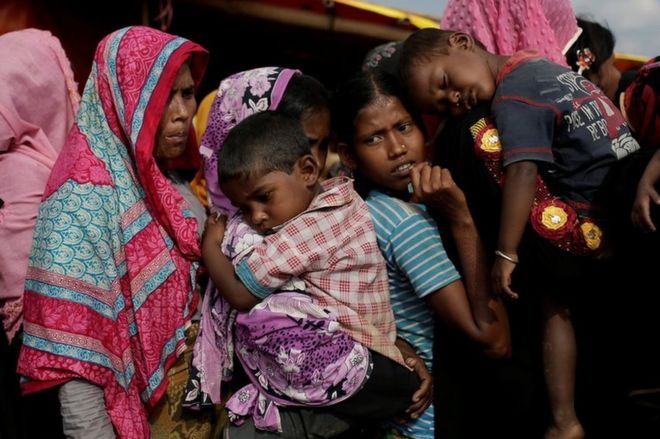
Image copyrightREUTERSImage captionHundreds of thousands of Rohingya are living in refugee camps in Bangladesh
Bangladesh says it has agreed a timeframe with Myanmar for repatriating hundreds of thousands of Rohingya who fled an army crackdown last year.
Myanmar has agreed to accept 1,500 Rohingya every week, Bangladesh says, adding that it aims to return all of them to Myanmar within two years.
Over 650,000 Rohingya have fled to neighbouring Bangladesh since violence erupted in Rakhine state in August.
Aid agencies have raised concerns about forcibly repatriating them.
A spokesperson from the UN High Commission for Refugees said Myanmar also needed to address the underlying causes of the crisis and that refugees should only return when they feel it is safe for them to back.
According to Reuters, the agreement did not specify when the process would begin but said Myanmar would provide temporary shelter to those returning and later build houses for them.
The two sides agreed on a repatriation deal last November and have now met in Myanmar's capital Naypyidaw to finalise the details.
Bangladeshi foreign secretary Md Shahidul Haque told BBC Bangla that the government had wanted Myanmar to accept 15,000 Rohingya each week - however, they eventually settled on 300 a day - 1,500 per week.
Both sides would review the agreement in three months, he added.
Under the current agreement, about 156,000 Rohingya would be repatriated in two years - far short of the 650,000 who have taken recently taken refuge in Bangladesh.
'Mistrust and fear'
Jonathan Head, BBC Southeast Asia correspondent
Both countries have agreed the repatriation will be voluntary. And most refugees say they will only return if their safety can be assured, their homes rebuilt, and if they are no longer subjected to official discrimination. None of these conditions is in place.
Myanmar has started rebuilding, but mostly for non-Muslims. It is preparing two transit camps, the first able to accommodate 30,000 people. Beyond that not much has changed.
More than 350 villages, nearly all of them Rohingya, have been burned down, some recently. The military, which is accused of terrible human rights abuses, still runs northern Rakhine State. It has denied the abuses, denied access to independent investigators, and strictly limits access for aid agencies.
There is talk of closing the camps in which 130,000 Rohingyas are still confined, but not yet of ending restrictions on Rohingya movements. And nothing is yet happening to reduce the mistrust and fear of Rohingyas felt by the non-Muslim population, some of whom have vowed to fight against any large-scale refugee return.
When the initial deal was signed, Amnesty International said it doubted there could be safe or dignified returns "while a system of apartheid remains" and added that it "hoped those who do not want to go home are not forced to do so".
The Rohingya are a stateless minority in Myanmar, also known as Burma.
Huge numbers have fled to Bangladesh after deadly attacks by a Rohingya group on police posts prompted a military crackdown in Rakhine state in late August.
The crisis has been described as ethnic cleansing by the UN and the US.
Despite widespread accusations of human rights violations, Myanmar has consistently denied persecuting its Rohingya minority.
Source: BBC Staff. “Rohingya Crisis: Bangladesh and Myanmar Agree Repatriation Timeframe.” BBC News, World , BBC, 16 Jan. 2018, www.bbc.com/news/world-asia-42699602.
Bangladesh says it has agreed a timeframe with Myanmar for repatriating hundreds of thousands of Rohingya who fled an army crackdown last year.
Myanmar has agreed to accept 1,500 Rohingya every week, Bangladesh says, adding that it aims to return all of them to Myanmar within two years.
Over 650,000 Rohingya have fled to neighbouring Bangladesh since violence erupted in Rakhine state in August.
Aid agencies have raised concerns about forcibly repatriating them.
A spokesperson from the UN High Commission for Refugees said Myanmar also needed to address the underlying causes of the crisis and that refugees should only return when they feel it is safe for them to back.
According to Reuters, the agreement did not specify when the process would begin but said Myanmar would provide temporary shelter to those returning and later build houses for them.
The two sides agreed on a repatriation deal last November and have now met in Myanmar's capital Naypyidaw to finalise the details.
Bangladeshi foreign secretary Md Shahidul Haque told BBC Bangla that the government had wanted Myanmar to accept 15,000 Rohingya each week - however, they eventually settled on 300 a day - 1,500 per week.
Both sides would review the agreement in three months, he added.
Under the current agreement, about 156,000 Rohingya would be repatriated in two years - far short of the 650,000 who have taken recently taken refuge in Bangladesh.
'Mistrust and fear'
Jonathan Head, BBC Southeast Asia correspondent
Both countries have agreed the repatriation will be voluntary. And most refugees say they will only return if their safety can be assured, their homes rebuilt, and if they are no longer subjected to official discrimination. None of these conditions is in place.
Myanmar has started rebuilding, but mostly for non-Muslims. It is preparing two transit camps, the first able to accommodate 30,000 people. Beyond that not much has changed.
More than 350 villages, nearly all of them Rohingya, have been burned down, some recently. The military, which is accused of terrible human rights abuses, still runs northern Rakhine State. It has denied the abuses, denied access to independent investigators, and strictly limits access for aid agencies.
There is talk of closing the camps in which 130,000 Rohingyas are still confined, but not yet of ending restrictions on Rohingya movements. And nothing is yet happening to reduce the mistrust and fear of Rohingyas felt by the non-Muslim population, some of whom have vowed to fight against any large-scale refugee return.
When the initial deal was signed, Amnesty International said it doubted there could be safe or dignified returns "while a system of apartheid remains" and added that it "hoped those who do not want to go home are not forced to do so".
The Rohingya are a stateless minority in Myanmar, also known as Burma.
Huge numbers have fled to Bangladesh after deadly attacks by a Rohingya group on police posts prompted a military crackdown in Rakhine state in late August.
The crisis has been described as ethnic cleansing by the UN and the US.
Despite widespread accusations of human rights violations, Myanmar has consistently denied persecuting its Rohingya minority.
Source: BBC Staff. “Rohingya Crisis: Bangladesh and Myanmar Agree Repatriation Timeframe.” BBC News, World , BBC, 16 Jan. 2018, www.bbc.com/news/world-asia-42699602.
Response
Audience: I think that based on the variety and level of vocabulary the Author does address a wide audience because it is not hard to read or understand but it does talk about an issue that is mostly talked about by young to older adults. I also think that this article was intended for either people from Bangladesh, Myanmar or Britain because the first two are direly involved in this issue but the article comes from a British News site.
Author Bias: I believe that the author does not have a very strong bias or he doesn't show it much because the article is mostly factual and a lot less emotional. However after reading the article it did seem like the author had a bias against the countries hosting the refugees because the author emphasized the fact that the host countries want to send the refugees back soon. Another reason I believe that the author has a bias against the hosting countries is because they did not agree to the first time where they should have taken more refugees however this number is smaller than the UN and other refugee organizations had hoped.
Personal Bias/Opinion: I do think that the whole issue with refugees is big and should not be taken lightly but I also know that some countries do not have the money or resources they need to support their own as well as outside people. I think that the refugees come from a horrible conflict and should not be left in that country in such a situation but deserved the right to a free and peaceful life. Refugees can be a burden to a country, and depending on what country it is also make it hard for the refugees to fit in. But I also believe that other nations should support the countries who are taking in refugees even more.
Comments
Post a Comment